Early cash registers

The cash register is broadly regarded to have been invented in 1879 by James Ritty. Most retellings of this story are misleading for a multitude of reasons.
- Multiple registers had been invented before his, at least three years earlier.
- The machine that he initially invented, now referred to as the "dial", was never sold and has no real place in the lineage of the technology
- The model that came after it, "The Incorruptible Cashier" (IC for short) is much closer to the machines that would catch on and establish the industry.
- However, many sources misidentify the dial as the Incorruptible Cashier
- Furthermore, all photos of the dial are replicas built by NCR which do not work.
All the same, the IC did come out in '79 and is unquestionably the progenitor of all practical cash registers, especially because he sold it to John Patterson, who used it to found NCR and built many machines on it's pattern. Practically speaking the story is true, but the details are widely misunderstood.
Predecessor: Cash Recording Machine
-
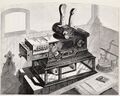 The 1878 version of the Cash Recording Machine, as illustrated in Scientific American
 -
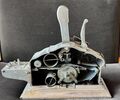 An actual specimen of the 1876 original version of the Cash Recording Machine, from Richard Crandall's ebay listing.


Much information about this machine comes from the patents, of which there are two: US188310 and US209827.